

Introduction
The majlis, meaning “a place of sitting” in Arabic, represents one of the most fundamental and enduring institutions in Emirati society. Far more than just a physical space, it is a profound cultural practice that embodies the core values of community, hospitality, and accessible leadership. This traditional gathering place serves as both the social heart of the family and the political nerve center of the community, maintaining its vital relevance in a rapidly modernizing nation.
History
The origins of the majlis date back to the earliest Bedouin traditions of the Arabian Peninsula. In the harsh desert environment, cooperation and community were essential for survival. The majlis emerged as a democratic forum where tribal members could gather to discuss affairs, resolve disputes, and share news. The ruler’s majlis was always open, embodying the principle that every citizen had the right to voice concerns directly to their leader. This tradition continued through the pearling era and into the formation of the UAE, with the founding father, Sheikh Zayed bin Sultan Al Nahyan, famously maintaining an open majlis as a cornerstone of his governance.
Key Features
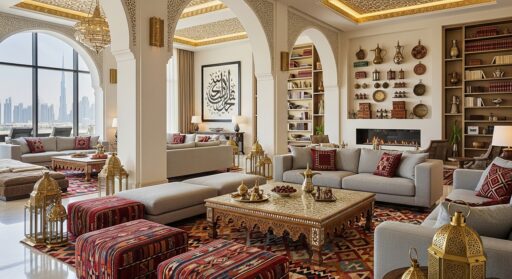
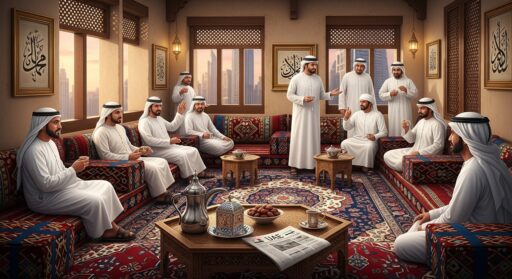
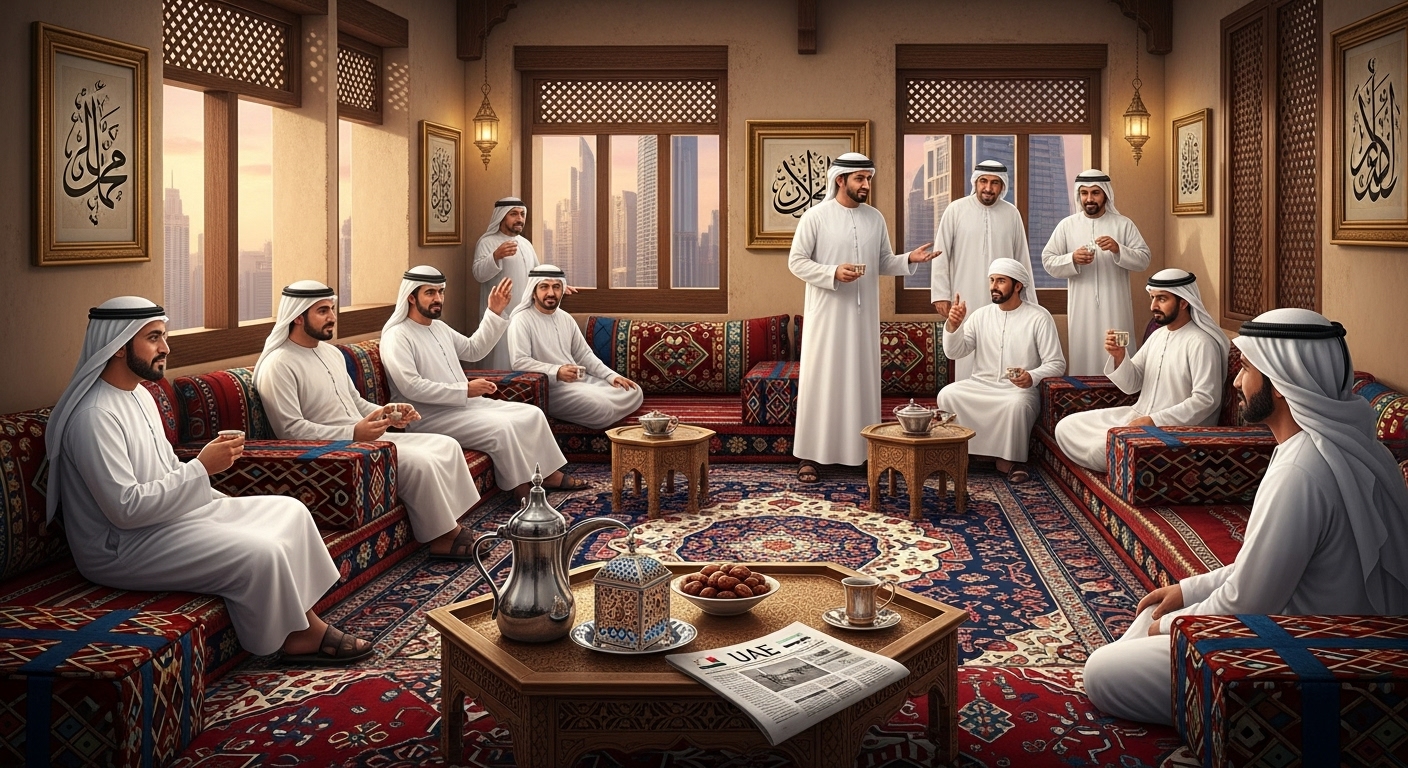
Traditionally, a majlis is a large, carpeted room with cushions placed against the walls for seating. The space is typically characterized by its simplicity and comfort, often scented with oud and bakhoor. There are two main types: the family majlis (Majlis Al Ailah) for relatives and friends, and the guest majlis (Majlis Al Deiuf) for receiving visitors. The proceedings follow unwritten but well-understood rules of etiquette: elders are greeted and seated first, coffee (gahwa) is served continuously as a symbol of welcome, and conversations range from personal matters to community issues in a respectful, often circular, manner.
Cultural Significance
The majlis is the bedrock of Emirati social cohesion. It functions as an informal school where young people learn language, poetry, history, and social norms from their elders. It strengthens family and tribal bonds through regular interaction. Politically, it represents a unique form of direct democracy and accessible governance. The practice of the open majlis ensures that leaders remain connected to the people’s needs and aspirations. It is a space where hierarchy is temporarily softened, and every voice, in theory, can be heard.
Modern Relevance
In contemporary UAE, the majlis has evolved while maintaining its core principles. Modern villas often include a designated majlis room, blending traditional decor with modern amenities. The institution has been formalized at the highest levels of government through entities like the Federal National Council, yet traditional open majlises continue. Furthermore, the concept has expanded to include digital majlises on social media platforms, where leaders engage with citizens virtually. The majlis remains crucial for cultural preservation, ensuring that amidst skyscrapers and megaprojects, the Emirati values of community and open dialogue endure.
Conclusion
The majlis is far more than architecture or social custom; it is the living room of the Emirati nation. It represents an unbroken chain of cultural continuity, adapting its form but never its function. As a space that nurtures social bonds, facilitates governance, and transmits heritage, the majlis continues to be an indispensable institution, proving that the most enduring elements of a culture are not its buildings, but its gatherings.