


Introduction
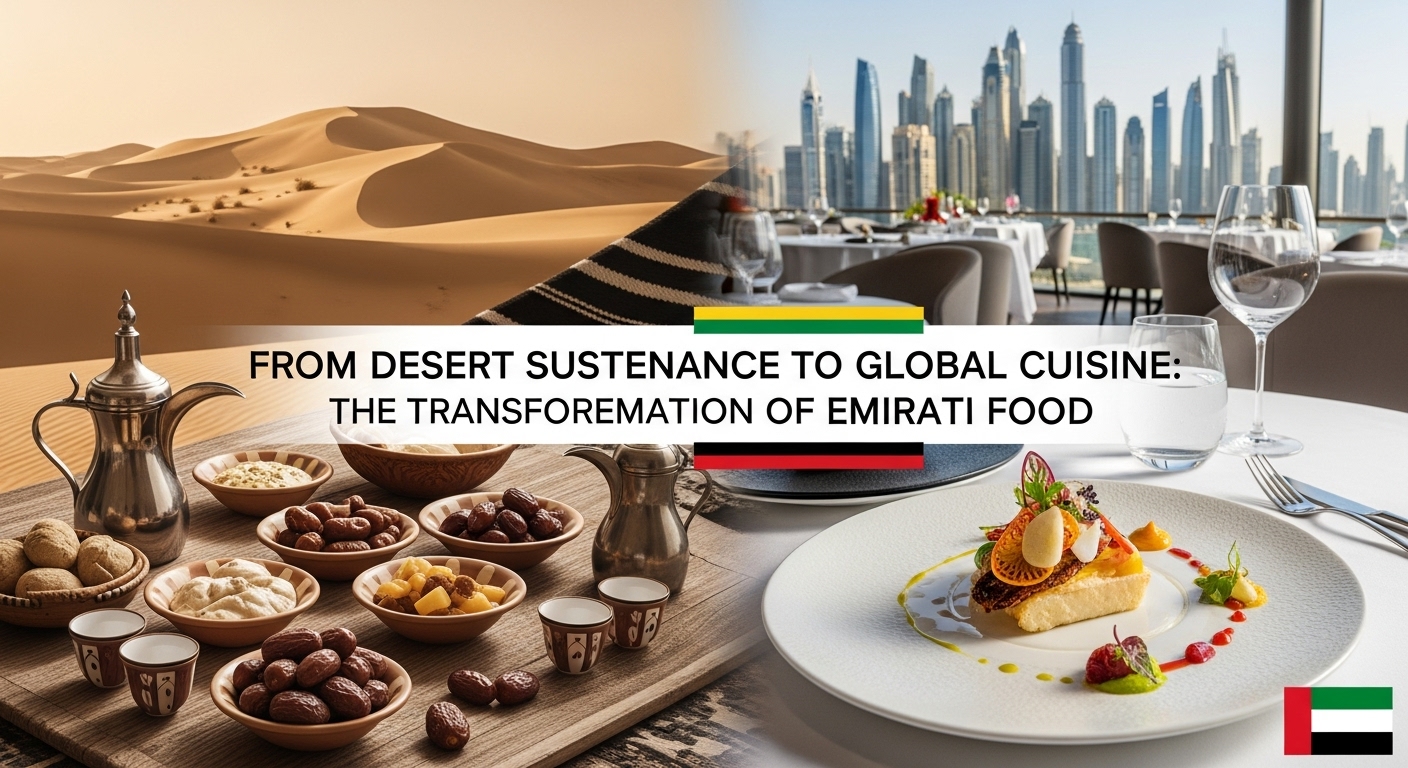
Emirati cuisine offers a delicious narrative of survival, adaptation, and cultural fusion. From its humble origins as a sustenance-based diet in a harsh desert environment, it has evolved into a dynamic culinary scene that honors its Bedouin and coastal roots while embracing global influences. The story of Emirati food is, in many ways, the story of the nation itself—rooted in tradition yet confidently engaging with the world.
History
The traditional diet was shaped by scarcity and the available local resources. Bedouin communities relied on proteins like camel, goat, and sheep, along with dates, dairy products (laban and yoghurt), and grains like wheat and rice obtained through trade. Coastal communities centered their diet around fish, shrimp, and other seafood. The key was preservation—drying dates, salting fish, and fermenting dairy. Cooking methods were simple, often involving slow-cooking in underground pits (madfoon) or over open fires. Spices, though not as varied as today, were crucial, with black lime (loomi), turmeric, and cardamom featuring prominently.
Key Features
Traditional Emirati cuisine is characterized by its hearty, sharing-based dishes. Staple foods include:
- Rice: A cornerstone, often flavored with spices and served with meat or fish.
- Dates: A historic superfood, consumed fresh, dried, or in desserts.
- Seafood: Fish like hamour and kingfish are grilled (masgouf) or used in stews.
- Meat: Lamb and chicken are featured in iconic dishes.
Signature dishes include Machboos (a spiced rice dish with meat or seafood, similar to biryani), Harees (a savory porridge of wheat and meat), and Luqaimat (sweet, fried dough balls drizzled with date syrup). The communal aspect of eating from a shared platter remains a key feature.
Cultural Significance
Food is deeply intertwined with Emirati hospitality and identity. The offering of food and drink (especially dates and gahwa) to a guest is a sacred duty. Meals are social events that strengthen family and community bonds. Traditional dishes are central to religious celebrations like Eid and Ramadan, where iftar meals often begin with dates and laban, followed by hearty dishes like harees. The knowledge of preparing these dishes, passed down through generations of women, is a vital thread in the fabric of cultural preservation.
Modern Relevance
The contemporary Emirati food scene is a vibrant tapestry. While traditional home cooking remains cherished, a new generation of Emirati chefs and food entrepreneurs is revitalizing the cuisine. They are opening restaurants that reinterpret classic dishes with modern presentation and techniques, sparking a gourmet national food movement. Furthermore, the UAE’s status as a global hub has made international cuisines readily available, influencing local palates. Despite this, there is a growing pride and curiosity about authentic Emirati food, with food festivals and cooking classes helping to safeguard these culinary traditions for the future.
Conclusion
The journey of Emirati food from desert sustenance to a cuisine with global resonance reflects the nation’s remarkable trajectory. It is a cuisine that has not forgotten the wisdom of its ancestors—the ability to create flavor and nutrition from a limited palette. Today, as it evolves and gains international recognition, Emirati food continues to tell a powerful story of resilience, hospitality, and the enduring flavor of home.