

Introduction
A seemingly simple administrative decision can sometimes trigger profound social change. This was the case in the UAE when, in September 2022, the nation transitioned from a Friday-Saturday weekend to a Saturday-Sunday weekend. This shift, aligning the UAE more closely with global markets, was more than just a calendar change; it represented a significant recalibration of the rhythm of social, religious, and family life, showcasing the country’s dynamic ability to adapt its traditions to a globalized context.
History
For decades, the UAE’s weekend was Friday and Saturday. This structure was a compromise that honored the Islamic tradition of Jumu’ah (Friday congregational prayers) as a day of rest and worship, while also dedicating one day (Saturday) to align partially with the international business week. Friday became the cornerstone of social and family life, marked by large family lunches, weddings, and community gatherings after prayers. This rhythm became deeply ingrained in the national lifestyle for generations.
Key Features
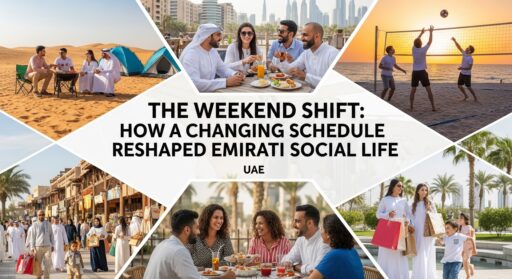
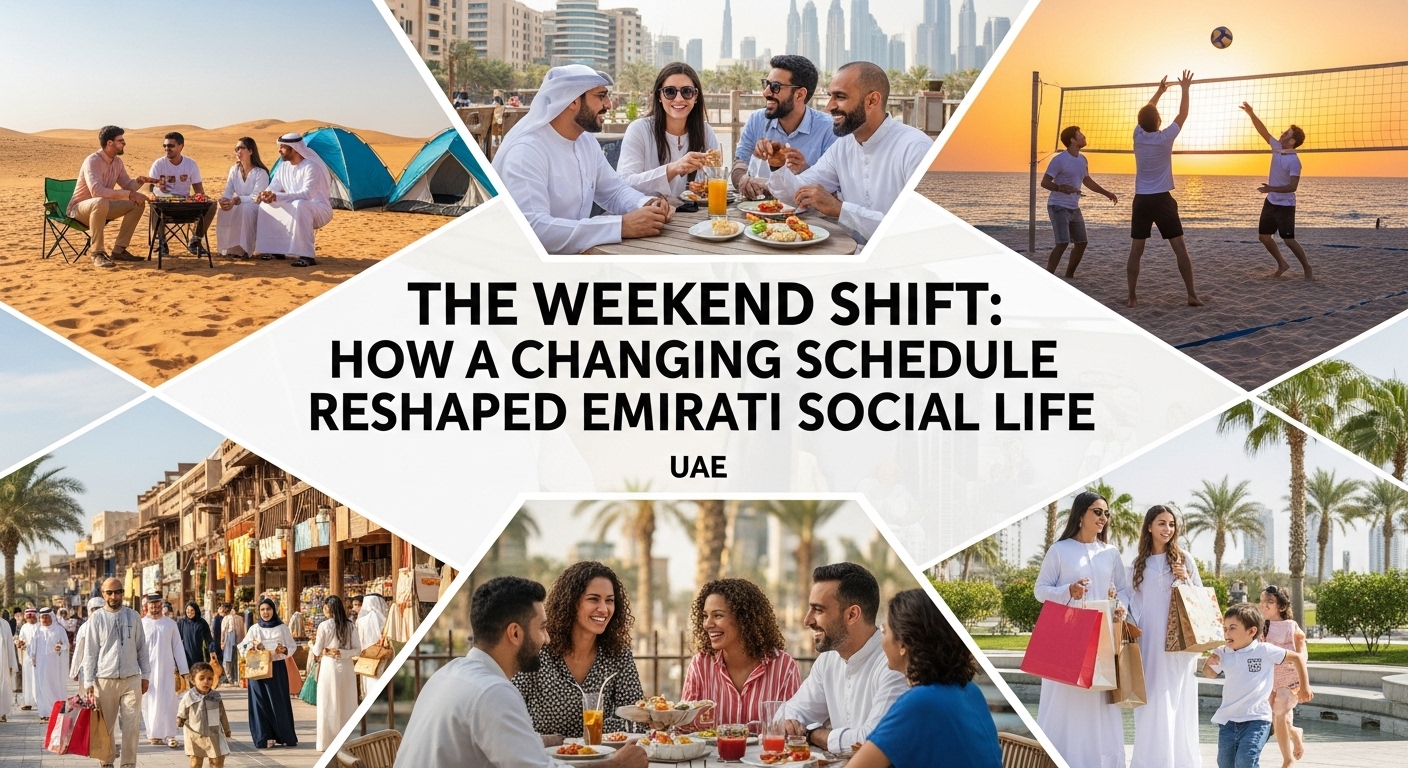
The new weekend structure introduced several key changes. The official workweek was shortened to four-and-a-half days, with Friday being a half-day ending at 12:00 PM to ensure employees could attend Jumu’ah prayers. This created a longer, uninterrupted break from Friday afternoon through Sunday. The change necessitated a reshuffling of the traditional “Friday Brunch” culture, a popular social institution, to now often take place on Saturdays or Sunday. Family gatherings, which were once centered on a full Friday, now had to adapt to a longer, more flexible weekend period.
Cultural Significance
The weekend shift highlighted the delicate balance the UAE maintains between its Islamic identity and its global ambitions. By protecting the time for Friday prayers, the policy demonstrated a commitment to preserving religious observance as a non-negotiable pillar of society. At the same time, the move signaled a confident step towards deeper global integration, facilitating smoother financial and business transactions with Europe, Asia, and the Americas. Socially, it challenged and subsequently evolved long-held routines, demonstrating the adaptability of Emirati social structures.
Modern Relevance
The new schedule has had a tangible impact on daily life. It has created a more universal weekend for multinational families and the expatriate community, simplifying logistics for travel and leisure. For Emirati families, it has meant re-organizing the weekly rituals that reinforce kinship, but it has also created new opportunities for two-day getaways and different patterns of socializing. The half-day Friday has become a new cultural marker—a dedicated window for worship and the transition into the weekend, preserving the special status of Friday while embracing a new weekly rhythm.
Conclusion
The UAE’s weekend shift is a powerful symbol of its pragmatic and forward-looking governance. It proves that cultural and religious traditions can be thoughtfully preserved within a framework designed for global engagement. The change was not about abandoning tradition but about re-engineering its place in a modern context. The successful adaptation to this new rhythm by society at large is a testament to the dynamic and resilient nature of Emirati culture, which continues to write its social rules for the 21st century.