


Introduction
In the United Arab Emirates, the holy month of Ramadan transforms the rhythm of daily life, creating a unique period of spiritual reflection, communal bonding, and cultural celebration. Beyond the religious observance of fasting, Ramadan in the UAE is a profound social and cultural experience that reinforces national identity, family ties, and the deeply ingrained value of generosity, casting a special glow over the nation’s cities and communities.
History
The observance of Ramadan has been a cornerstone of life in the region since the arrival of Islam. In the pre-oil era, the rhythm of the month was dictated by the sun and the call to prayer. The fast was rigorous, broken with simple, locally available foods like dates, harees, and coffee. The nights were spent in prayer, storytelling, and visiting relatives. The last ten days, believed to contain the Night of Power (Laylat al-Qadr), were observed with particular intensity. These historical practices established the core template of prayer, fasting, and community that defines Ramadan today.
Key Features
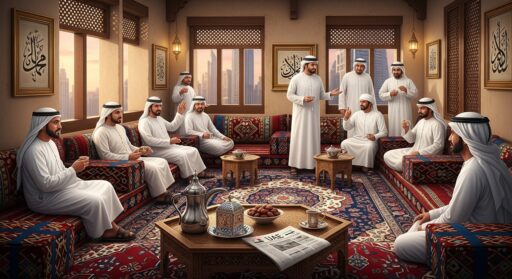
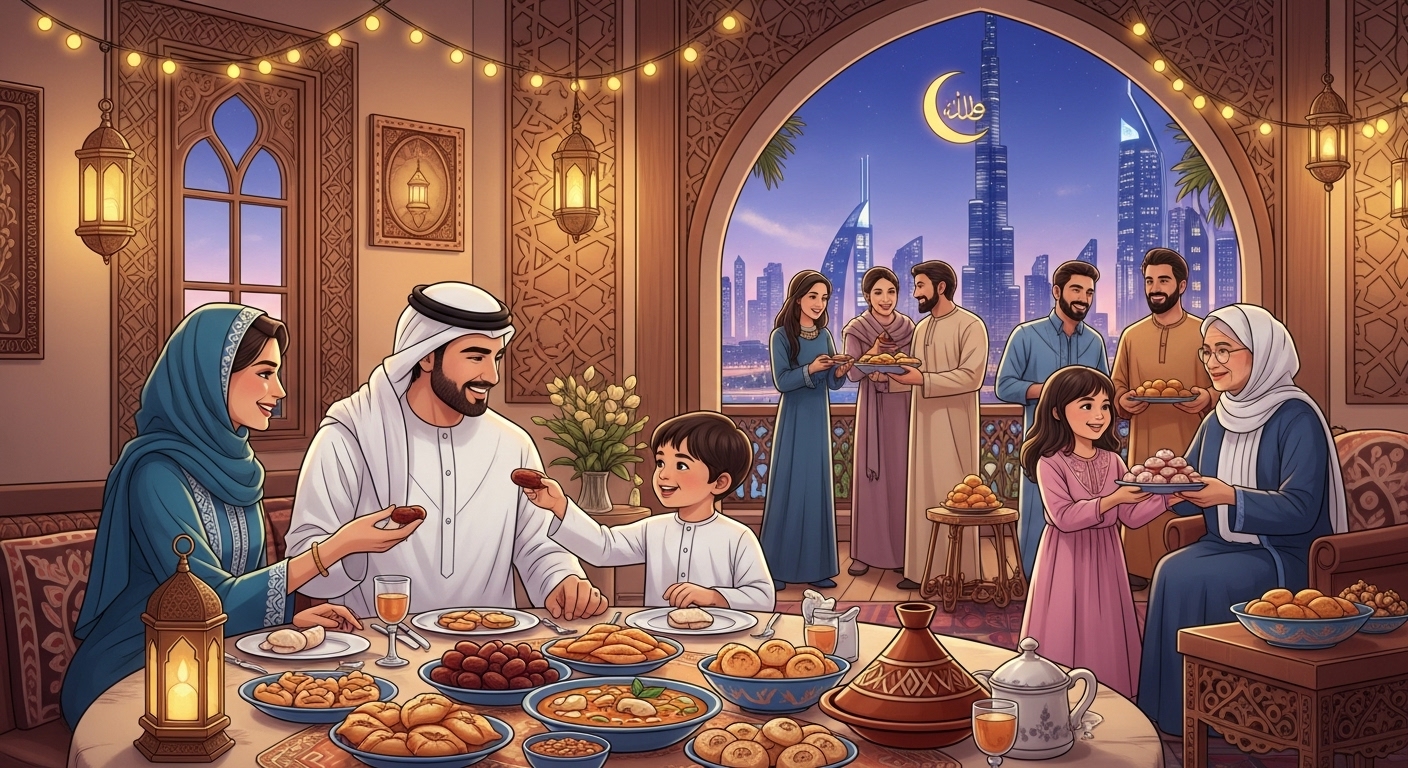
The modern Emirati Ramadan is characterized by distinct rituals and changes in social tempo. The working day is shortened, and life largely shifts to the cooler night hours. The fast is broken at sunset with the Iftar meal, often starting with dates and water, followed by a lavish spread of traditional and international foods. This is a deeply communal act, with families gathering and mosques and hotels offering large, charitable Iftar tents. The night is marked by special Taraweeh prayers at mosques and social visits. The pre-dawn meal, Suhoor, has evolved into a social event of its own, with many restaurants offering special late-night menus and entertainment.
Cultural Significance
Ramadan serves as an annual reinforcement of Emirati and Islamic values. It is a time for heightened spirituality, self-discipline, and empathy for the less fortunate, leading to a surge in charitable activities (Zakat and Sadaqah). The month powerfully strengthens familial and social bonds, as the daily Iftar meal acts as a mandatory family reunion. The tradition of Gerga’oon in the middle of the month sees children dressing in traditional clothes and singing for sweets from door to door, fostering community spirit among the young. It is a time when the national culture of hospitality is at its peak.
Modern Relevance
While the essence of Ramadan remains unchanged, its expression has adapted to modern life. Shopping malls and cultural centers host special events, exhibitions, and decorations, creating a festive atmosphere. The media airs special religious and cultural programs. For the UAE’s vast expatriate population, experiencing Ramadan offers a deep and meaningful insight into the local culture and religion, promoting tolerance and understanding. The government plays an active role in regulating working hours and sponsoring community Iftars and celebrations, ensuring the month’s spiritual and social objectives are met for all residents.
Conclusion
Ramadan in the UAE is a powerful synthesis of devotion and community, a month where the past and present harmoniously converge. It slows down the frantic pace of modern life to make space for faith, family, and reflection. This annual rhythm provides a crucial cultural anchor, reminding everyone of the enduring values that underpin the society. It is not merely a religious obligation but a cherished and defining season in the Emirati year, whose spirit lingers long after the month has passed.